Protection at
the wafer surface.
A removable coating for wafer surfaces during laser grooving and dicing. GMAX is designed for compatibility with the cutting zone, protection outside it and water-based removal after processing.
Material structure study
From surface protection to removal.
Form a protective wafer coating
Evaluate coating and drying parameters for the surface and equipment. Film adhesion and uniformity are key checks before laser processing.
Support laser grooving and dicing
The film in the cutting path must respond to the laser, while the surrounding coating protects the surface against condensate and debris.
Remove the coating and process residue
GMAX-U06 is water soluble. Validate the cleaning method and duration for the film thickness, substrate, laser conditions and cleanliness criteria.
Assess cleanliness and surface condition
Use microscopy or an appropriate method to inspect residue, surface discoloration and the dicing street before assessing downstream compatibility.
Material properties
| Property | GMAX-U06 |
|---|---|
| Appearance | Colorless, transparent liquid |
| Water solubility | Soluble |
| Viscosity (25°C) | 65 ± 10 cP |
| Specific gravity | 1.03–1.05 |
| pH | 3.5–4.5 |
| Boiling point | <120°C |
Source: InnoChem introduction, November 2022. These are historical product data. Request the current TDS / SDS and confirm supply specifications before purchasing or process qualification.
Surface observations before and after cleaning
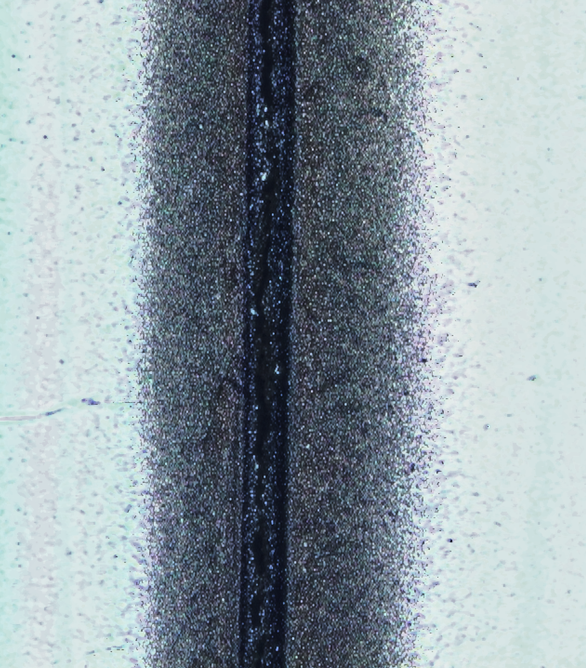
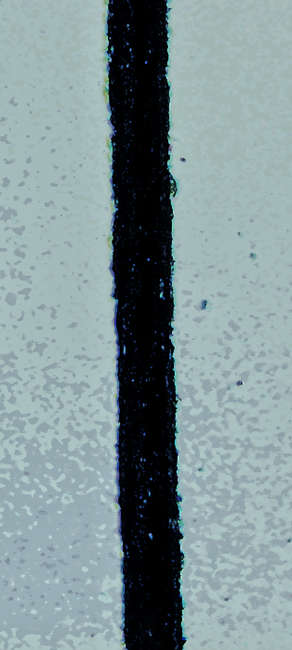
Original images from the 2022 company introduction; observations from that evaluation.
Read cleaning results in context.
The presentation describes evaluation on a 6-inch, 600 μm wafer coated with GMAX-U06, scored using a 20 W NANO UV laser and rinsed with ultrapure water for about one minute. It reports reduced surface discoloration after cleaning.
This does not establish performance for every wafer or tool. Production yield and cleanliness must be verified in the actual process.
Discuss an evaluationQuestions before qualification.
Which laser conditions are suitable for GMAX?
The source includes UV laser evaluation and describes adjusting absorption for the tool wavelength. Share wavelength, pulse conditions, power, substrate and process objectives for assessment.
Does GMAX guarantee a yield improvement?
Yield depends on the wafer, laser settings, film thickness, cleaning conditions and downstream processing. Establish a baseline and validation plan before assessing the result.
How can I request a sample or technical data?
Send your company, application and evaluation requirements through the contact page to discuss technical documents, sample availability and supply terms.
Start with your application.
Tell us about your material requirements, operating conditions and validation goals.